


 ER
ER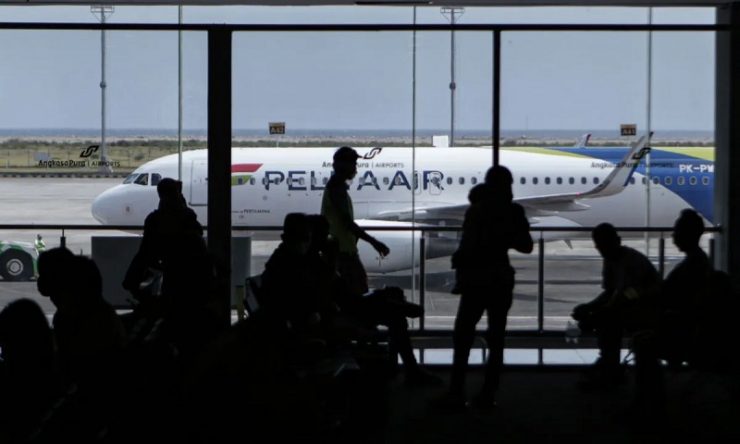

PT ANGKASA Pura Indonesia, or InJourney Airports, will continue developing four airports by 2026. This is part of the transformation of airport infrastructure and facilities to improve service quality and the experience for airline passengers.
“This year, we will continue the development program at four airports as part of the premises transformation,” said InJourney Airports President Director Mohammad R. Pahlevi when confirmed in Padang, West Sumatra, on Thursday (06/18), 2026.
He revealed that the development program will be implemented at I Gusti Ngurah Rai Airport in Bali, Soekarno-Hatta (Soetta) Airport in Tangerang, Minangkabau Airport in Padang, and Depati Amir Airport in Pangkalpinang.
Pahlevi explained that the essence of transformation is to continuously move and change for the better through various continuous improvements made to raise service standards for airport visitors and airline passengers.
According to him, airport development is part of the transformation of the premises (airport infrastructure and physical facilities), which is focused on providing customer-experience-oriented infrastructure and facilities within the airport environment.
He stated that the development of Indonesia’s two busiest airports, Soekarno-Hatta Airport and I Gusti Ngurah Rai Airport, can create the best service standards that other airports can implement.
“Services at these two airports can set the standard for other airports. The developments are aimed at improving service and comfort, as well as meeting global standards, thus improving the position of both airports in the list of the 100 best airports in the world,” explained Pahlevi.
Target for the World’s 100 Best Airports
Developments at I Gusti Ngurah Rai Airport include this year’s passenger terminal, increasing capacity to 32 million passengers per year, up from the previous landside. After the passenger terminal, capacity will be increased to the airside.
Developments at the terminal include optimizing the departure piers at Gates 1-9 of the International Terminal, including the construction of connecting piers, landscaping and boarding seating areas, and expanding and beautifying public facilities.
In addition, supporting facilities and services are being revitalized, including the semi-outdoor commercial area, check-in area, and departure gate. At I Gusti Ngurah Rai Airport, construction of a connecting bridge between the Domestic Terminal and the International Terminal is also underway.
Pahlevi added that optimizing the international departure gate will further enhance passenger comfort, as will the addition of a connecting bridge between the International Terminal and the Domestic Terminal, which provides a dedicated lane for passengers with connecting flights.
“This will reduce check-in time. Meanwhile, at Soekarno-Hatta Airport, the development program includes the continued beautification of Terminal 3 and the revitalization of Terminal 1A,” he noted.
This year, Terminal 3’s beautification program included all commercial tenant facades in the departure area, all boarding gates, the check-in interior, and public facilities, including restrooms in the departure and arrival areas.
“Additional facilities were also added to the international flight boarding lounge, including a game corner. Another ongoing development program at Soekarno-Hatta Airport is the revitalization of Terminal 1A. After the revitalization, Terminal 1A will have a new look, significantly improved service standards, and more comprehensive and modern facilities for a seamless journey experience,” Pahlevi affirmed.
The revitalization will increase Terminal 1A’s capacity from 5.7 million passengers per year to 10 million passengers per year. It will also feature 36 check-in counters, up from 25 previously.
Conveyor belts will also be added to the baggage claim area, increasing from 5 to 7, allowing for the simultaneous handling of 3,500 pieces of baggage. The commercial area will be expanded to approximately 6,300 square meters from 4,400 square meters.
The revitalization of Terminal 1A continues the previously completed revitalization of Terminals 2F and 1C. Meanwhile, at Minangkabau Airport in Padang, the expansion includes terminal expansion. The new terminal, covering an area of approximately 47,000 square meters, can accommodate 5.7 million passengers annually, significantly increasing the previous 2.7 million passengers.
Expansions at the new terminal include domestic and international arrivals areas, domestic and international boarding lounges, commercial areas, and terminal landscaping.
Meanwhile, Depati Amir Airport in Pangkalpinang is expanding its terminal to 30,000 square meters, with a capacity of 3 million passengers per year, up from the previous 1.5 million.
In line with this expansion, the check-in area, curbside areas, security checkpoints, commercial areas, landscaping updates within the terminal, and interior beautification throughout the terminal are also being carried out.
InJourney Airports, as the operator of 37 airports, is committed to improving services at all airports to enhance customer service. [katadata.id/photo special]