

 ER
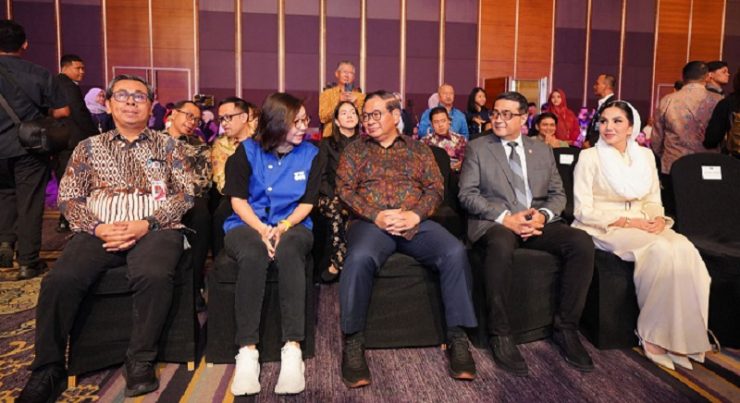

COLLABORATION between central and regional governments is a key factor in developing Indonesia’s creative economy. During the 5th World Conference on Creative Economy (WCCE) 2026, held at the Hotel Indonesia Kempinski, Jakarta, on Friday (10/23), 2026, the Governor of Jakarta, Pramono Anung, shared his perspectives on Jakarta’s potential as a center for creativity and a host for international-scale events.
Minister of Creative Economy Teuku Riefky Harsya stated that WCCE 2026 serves as a crucial momentum to advocate for strategic issues within the creative economy—matters that are relevant not only to Indonesia,
“But also to the global creative community, particularly in developing nations. These issues include the protection and financing of intellectual property, the expansion of market access, and the challenges surrounding the use of artificial intelligence (AI),” he said.
A key outcome of WCCE 2026 is the “Jakarta Vision on Creative Economy,” a document that encapsulates the aspirations of global creative economy stakeholders. Supported by 38 heads of delegations, this document will be championed by Indonesia—in coordination with the Ministry of Foreign Affairs—for adoption as an updated United Nations (UN) resolution, with plans for it to be discussed at the UN General Assembly (UNGA) toward the end of 2026.
“Through the Jakarta Vision on Creative Economy, we aim to elevate the aspirations of creators to the global stage—addressing issues such as fair benefit-sharing on digital platforms, intellectual property protection, access to financing, and market expansion. It is our hope that the creative economy will become a strategic agenda for global development beyond the conclusion of the Sustainable Development Goals (SDGs) in 2030,” the Minister added.
At the regional level, Jakarta possesses immense potential for the development of the creative economy. Pramono Anung stated that this sector contributes approximately 11.16% to Jakarta’s Gross Regional Domestic Product (GRDP), amounting to a value of IDR410 trillion. The hosting of various music events, sports, exhibitions, and creative activities drives economic activity while creating opportunities for local business owners.
“Jakarta aspires to be a home for creativity and an epicenter for hosting diverse events. We want international artists, investors, and creative industry professionals to feel welcome in Jakarta, while ensuring local creators have the chance to reach global markets and small business owners find opportunities to grow,” Pramono affirmed.
Several large-scale events highlight this potential. The Jakarta Fair Kemayoran recorded transaction values of approximately IDR8.2 trillion, drawing 6.1 million visitors. Meanwhile, the Jakarta Great Sale generated transaction values of around IDR26.8 trillion.
The Jakarta Provincial Government also provides incentives in the form of a 50% tax reduction for Indonesian film-related activities, in accordance with prevailing regulations. This policy is intended to strengthen Jakarta’s position—not merely as a consumer market, but also as a hub for film production.
“The Jakarta Provincial Government, in collaboration with the Ministry of Creative Economy, is fostering Jakarta’s development as a new hub for the creative economy—encompassing all elements, sectors, and spaces. We want the benefits of these creative activities to be felt not only by the organizers but also by the broader public, hotels, restaurants, MSMEs, and the creative communities involved,” added Pramono.
Collaboration between the central and regional governments is also focused on strengthening the creative ecosystem by providing collaborative spaces, developing creative districts, improving transport connectivity, and organizing events that expand market access. The Blok M area, for instance, has evolved into a hub for culinary, music, local businesses, and creative communities, supported by access to public transportation.
The WCCE 2026 brings together government officials, industry players, creative communities, and international stakeholders to discuss the future of the creative economy. This forum was attended by representatives from over 80 countries, with a total of 6,100 participants, 38 heads of delegations, and approximately 180 speakers representing 21 subsectors of the creative economy.
Through this forum, the Ministry of Creative Economy promotes cross-border cooperation to strengthen intellectual property protection, expand access to financing, and open up markets for creative economy stakeholders.
Meanwhile, the Jakarta Provincial Government is committed to developing policies and supporting infrastructure to make Jakarta increasingly competitive as a global city and a hub for creativity that generates economic benefits for the public. [traveltext.id]