

 ER
ER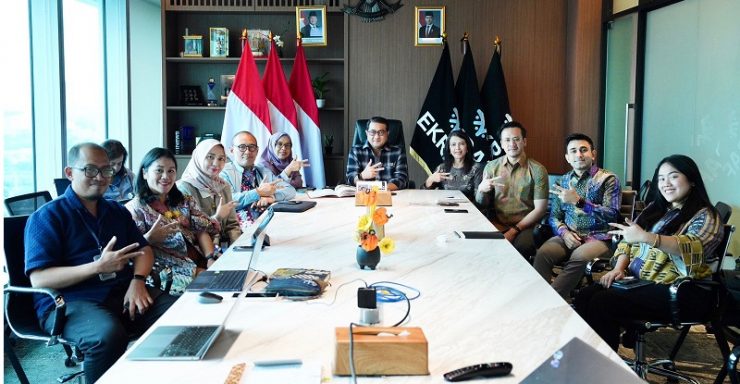

THE MINISTRY of Creative Economy (Ekraf) is encouraging the realization of Indonesian gastronomy as intellectual property (IP) to provide added value. Furthermore, the Ministry is committed to developing regional creative economy potential to elevate its stature.
According to the Minister of Creative Economy, Teuku Riefky Harsya, during a recent reception with the Indonesia Gastronomy Community (IGC) at Autograph Tower in Jakarta, he expressed his gratitude for the efforts to explore our culture. At the Ministry of Creative Economy, we encourage cultural wealth to become IP that can be commercialized and provide broad benefits to the community.
“Indonesian gastronomy, as a new engine of growth, has great potential because it relies on regional potential that possesses strong cultural strength and differentiation. One example is tumpeng, which has characteristics across Indonesia and provides a strong foundation for development as a national gastronomic IP,” he said.
He added that with its deep storytelling, tumpeng is not only relevant as a cultural product but also has the potential to become an instrument of Indonesian soft diplomacy at the global level. On the occasion, the IGC outlined various initiatives it has undertaken since its founding in June 2020 as a non-profit community dedicated to preserving Indonesian food and beverages, along with their accompanying cultural and philosophical values.
“The IGC is an initiator of the development of the Indonesian gastronomy ecosystem based on research, curation, and strengthening intellectual property. This community focuses on strengthening the branding of Indonesian gastronomy, developing Indonesian culinary IP, curating and increasing the added value of gastronomy MSMEs, and positioning gastronomy as a soft power for the national economy,” Riefky stated.
Meanwhile, the Chairperson of the IGC for the 2023–2026 period, Ria Musiawan, emphasized that the nearly six years of IGC’s existence provide momentum to expand strategic collaboration, particularly with the government, to strengthen the national gastronomy ecosystem.
“The IGC is a community that loves food, beverages, culture, and gastronomic philosophy. We want tumpeng (rice cone) to be better known and understood for its meaning as a symbol of unity. We hope today is a good start to building more concrete collaborations,” Ria affirmed.
She added that strengthening national gastronomic IP through the development of the Indonesian Tumpeng Book as National Gastronomy IP is a priority. Furthermore, the IGC also proposed strengthening curation and storytelling for culinary MSMEs, developing a Gastronomy Creative Hub and an experience economy-based exhibition model, integrating gastronomy into national and global creative economy promotion agendas, and developing a social impact-based gastronomy model through local food education.
Likewise, Yuke Sri Rahayu, Deputy for Cultural Creativity and Design at the Ministry of Creative Economy, expressed her appreciation for the IGC’s consistent efforts in highlighting the richness of culinary history and culture. She emphasized the importance of strengthening curation and storytelling to ensure Indonesian cuisine’s global competitiveness.
According to her, many Indonesian culinary delights have the potential to be vegan-friendly, gluten-free, halal, and healthy foods, which, if properly narrated, can increase economic value and business turnover.
“As a follow-up, the tumpeng tradition can serve as a pilot project demonstrating that our cultural richness has significant added value potential for the commercialization of national gastronomic IP,” Yuke said.
This audience marked the strengthening of synergy between the government and the community in building a gastronomic ecosystem based on intellectual property, while also emphasizing the role of Indonesian cuisine as a cultural identity and driver of the national creative economy. [traveltext.id]