

 ER

THE MINISTRY of Tourism has stated that the ‘green card’ status granted by UNESCO serves as a guarantee of international standards, facilitating the promotion of geoparks as sustainable tourism destinations.
“UNESCO Global Geopark (UGGp) status acts as a guarantee of international standards, making it easier to promote sustainable tourism destinations to international markets—specifically to travelers who care about the preservation of nature and culture,” said Ministry of Tourism spokesperson Nia Niscaya in Jakarta on Saturday (11/14, 2026).
Nia noted that UGGp status also serves as a tool for regional transformation, integrating nature conservation, education, and the economic empowerment of local communities. This aligns with the current shift in tourism—moving away from mass tourism toward high-quality, sustainable tourism—which forms the foundation for a green economy in pursuit of the ‘Golden Indonesia 2045’ vision.
Citing expert findings featured in the *Indonesia Tourism Outlook 2026/2027*, the report indicates that tourism trends in Indonesia will increasingly focus on travel experiences and be heavily influenced by social media.
Experts identified five key tourism trends expected to lead the market: event-based tourism, the impact of social media, eco-friendly tourism, culinary and gastronomic tourism, and nature and adventure tourism.
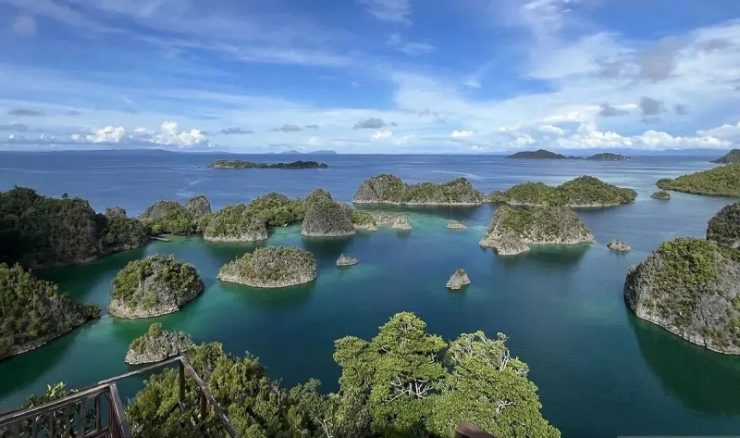
“These five tourism trends are closely linked to geopark tourism—or ‘earth tourism’—such as the UGGp in Bojonegoro,” Nia said. Therefore, the Ministry of Tourism will strive to maintain the “green card” status for the five geoparks—Belitong, Merangin Jambi, Ijen, Raja Ampat, and Maros-Pangkep—as recognized by the UNESCO Global Geoparks Council, ahead of the 11th session to be held in Paris, France, from November 2–4, 2026.
“The green card status must be upheld. This designation is awarded to areas with UNESCO Global Geopark (UGGp) status that successfully pass a re-evaluation (revalidation) every four years, ensuring no violations of conservation standards have occurred,” said Nia.
Nia further stated that the central government—through the Ministry of Culture, the Indonesian National Commission for UNESCO (KNIU), and the Ministry of Tourism—is working alongside local governments and management bodies to strengthen the implementation of the 2025–2034 Area Management Master Plan.
“Key priorities include improving visitor information and safety facilities, providing training for guides, enhancing geopark-related education, and conducting research,” Nia concluded. [antaranews]