

 ER
ER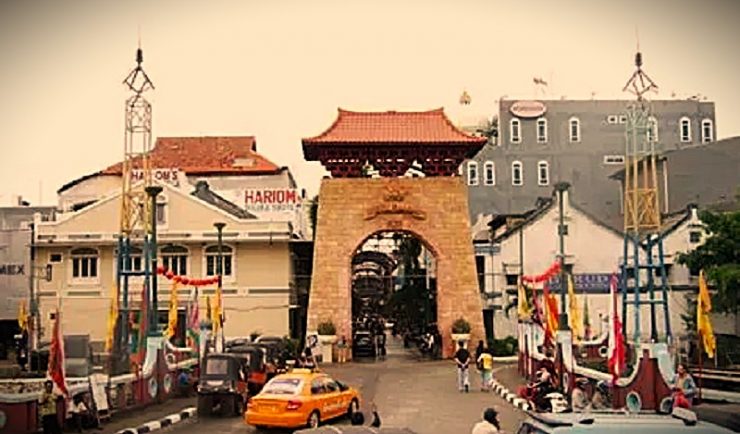

THE JAKARTA Provincial Government plans to begin revitalizing the Pasar Baru, Glodok, Chinatown, and Kota Tua areas in mid-2026, aiming to revive historic districts while boosting economic activity and tourism in the capital.
“So, in the middle of this year, we will start tidying up and working on Pasar Baru, Glodok, Chinatown, and Kota Tua,” Jakarta Governor Pramono Anung said when met in Central Jakarta on Thursday (01/8), 2026.
However, Pramono noted that the revitalization of Pasar Baru cannot begin immediately, as the provincial administration is still prioritizing the completion of the MRT project.
“Our current focus is completing the MRT. Perhaps within the next few weeks, or next week, we will begin the groundbreaking for the MRT project in the Duta Merlin area,” he said.
Earlier, in June 2025, Pramono inspected Pasar Baru and stated that the area would undergo a major revitalization. He emphasized the need to bring the historic shopping district back to life, as it has seen a decline in visitors.
“After we successfully revitalized Blok M and it has become lively again, Pasar Baru is next,” Pramono said.
According to him, Pasar Baru still appears outdated and poorly organized, both in terms of visual elements and supporting infrastructure. Comprehensive improvements are needed, covering transportation access, parking facilities, and the cleanliness of the river flowing through the area.
One of the main concepts of the revitalization plan is to position Pasar Baru as a center for Jakarta’s signature souvenirs as well as a shopping tourism destination.
Its strategic location near the Jakarta Arts Building, Istiqlal Mosque, the Cathedral Church, and the Presidential Palace makes the area highly suitable for redevelopment.
To improve accessibility, the Jakarta Provincial Government plans to open new Transjakarta routes, including services from Blok M and Tebet to Pasar Baru, along with other strategic routes across the city.
Regarding funding, Pramono stressed that the revitalization will not rely solely on the Jakarta Regional Budget.
The administration is seeking collaboration with various stakeholders and plans to optimize existing assets, including government-owned parking facilities that have not been fully utilized.
Pasar Baru, established in 1820, is Jakarta’s oldest shopping district. It became a prestigious shopping center for Europeans and was often referred to as “Little India” due to the large number of Indian, particularly textile, and Chinese traders who established businesses there.
It was built during the Dutch colonial era to serve the elite Rijswijk area, now Jalan Veteran, following the relocation of the colonial administrative center to Weltevreden.
Weltevreden itself is a historic area that once served as the administrative, social, and cultural center for Europe’s elite during the Dutch colonial period. Developed in the early 19th century as a “new capital” of Batavia to replace the overcrowded old city, Weltevreden encompasses areas such as Pasar Baru, Sawah Besar, Gambir, and Lapangan Banteng.
The district is known for its classical architecture, expansive parks, and iconic buildings, including the Jakarta Arts Building.
The name Weltevreden, meaning “a calm and pleasant atmosphere” in Dutch, reflected its original purpose as a comfortable residential area for the upper class.
To this day, Pasar Baru stands as a living testament to the cultural acculturation between Chinese and European communities, long recognized as a hub for textile trade, spices, and culinary offerings.
Its preserved historic buildings continue to serve as city landmarks, keeping Pasar Baru relevant as a destination for nostalgic shopping and culinary tourism in Jakarta. [antaranews]