

 ER
ER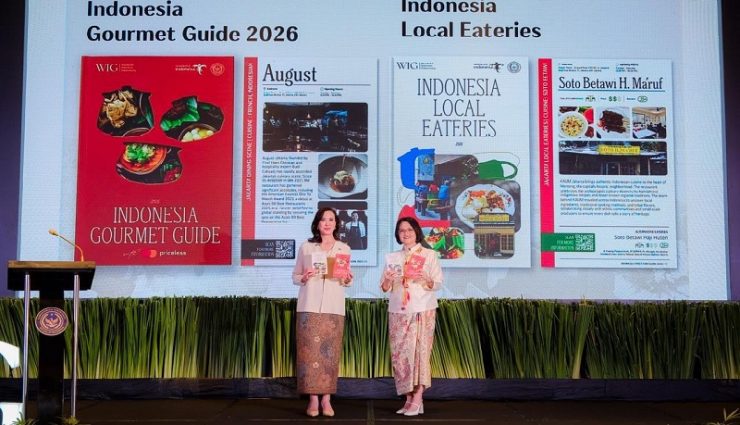

AFTER kicking off its series of events at Pura Mangkunegaran, Solo, Wonderful Indonesia Gastronomy (WIG) 2026 continued to the Special Region of Yogyakarta, featuring WIG Talks, an Artisan Market, and various activities designed to connect Indonesia’s (RI) gastronomic richness with the industry and the market.
Minister of Tourism Widiyanti Putri Wardhana opened WIG Talks 2026 at the Grand Hotel De Djokja, Yogyakarta, on Friday (February 10, 2026) said the forum featured 22 speakers across five discussion sessions and one book review session, drawing such high enthusiasm that the number of participants exceeded the target of 300 people.
“We are bringing together the government, industry players, chefs, practitioners, academics, and communities to discuss gastronomy from various perspectives—as an identity and a socio-economic driver, how culinary heritage can evolve into business, the potential of gastronomic tourism, and how Indonesian flavors and stories can be crafted into a global narrative,” said Widiyanti.
According to the Minister, gastronomic tourism goes beyond the mere experience of tasting food. Indonesia’s culinary wealth needs to be developed into an attraction that drives tourism while delivering sustainable economic benefits to the community.
“The ultimate goal is not just to get people to taste Indonesian food. We want flavors to become a reason for people to travel—to visit a region, meet its people, get to know the ingredients, hear the stories, and ultimately leave behind economic benefits for those living along the gastronomic value chain,” she stated.
The Colorful Flavors of the Archipelago
The spirit of connecting a wealth of flavors with business opportunities was also embodied in the Artisan Market, held from October 2–4, 2026, at the Grand Hotel De Djokja. A total of 21 tenants from the Joglosemar region and Jakarta participated, alongside 13 collaborators who hosted various workshops, sharing sessions, and live cooking demonstrations. The three-day event aimed to attract up to 1,300 visitors.
The Artisan Market served as a meeting point celebrating the diversity, creativity, and quality of local gastronomic products. Visitors could discover a wide array of goods made from local ingredients—ranging from distinctively aromatic rice, select spices, and international-standard artisan cheeses to Indonesian teas, coffees, and traditional herbal drinks (*jamu*) with a modern twist.
A variety of other regional products also enriched the event, including pure honey, organic coconut sugar, high-quality tempeh, artisanal cookies, and fermented beverages like kombucha and artisan sodas. This diversity highlights the immense potential of local ingredients and the creativity of Indonesian culinary producers in transforming them into value-added products that—with the right development—can compete in the global market.
“Producers and MSMEs from various regions are connected to the market through a diverse range of products. This is crucial, as the gastronomy ecosystem thrives only when product creators gain access to buyers, the industry, and broader market opportunities,” said the Minister of Tourism.
According to the Widiyanti, creating a space where producers, MSMEs, the industry, and consumers can interact is vital to building a sustainable gastronomy ecosystem. In this way, culinary richness is not merely preserved as heritage but continues to evolve into a source of added value and prosperity for the community.
Cheese Production at Mazaraat Artisan Cheese
Efforts to provide a more holistic gastronomic experience are also realized through the “Tastemaker Gastronomy Trip.” One of the destinations is Mazaraat Artisan Cheese, a pioneering artisan cheese producer in Indonesia founded by Jamie Najmi and Nieta Pricillia.
At Mazaraat, visitors can witness the production process of various cheeses firsthand, try their hand at making cheese, and enjoy cheese spreads amidst the backdrop of Yogyakarta’s rice fields. This experience demonstrates how local food products can be developed into tourism attractions that offer both enjoyment and educational value to visitors.
Through WIG, the Ministry of Tourism aims to highlight the ability of Indonesian local products to compete with imports and integrate into the supply chains of hotels, restaurants, and cafes (HORECA).
“For us, this represents a vital aspect of gastronomy: where local richness moves beyond mere potential to enter the market, grow into a business, create added value, and become an integral part of the tourism industry,” said Tourism Minister Widiyanti during her visit to Mazaraat Cheese.
Continuing to West Sumatra
Following Solo and Yogyakarta, the WIG journey will continue to West Sumatra in 2027. Minister Widiyanti highlighted West Sumatra as a region whose rich flavors and culinary traditions have long served as a global face for Indonesia.
“After Solo and Yogyakarta, next year we will head to West Sumatra, a region whose rich flavors and culinary traditions have long been a globally recognized face of Indonesia. From there, we will continue to carry the same spirit: moving from local roots to global recognition, from flavors to journeys, and from journeys to prosperity,” Widiyanti stated.
The WIG 2026 series of events features not only WIG Talks and Forums and an Artisan Market but also the “Indonesia Restaurant Months” program—in partnership with Priceless by Mastercard—across 150 restaurants in six cities, as well as chef collaborations at various hotels and restaurants in three cities.
This year, the Ministry of Tourism is also collaborating with the Indonesian Shopping Center Association (APPBI) to present a “Culinary Festival” running from October 7 to November 1, 2026, involving 32 malls across 14 cities. [traveltext.id]