

 ER
ER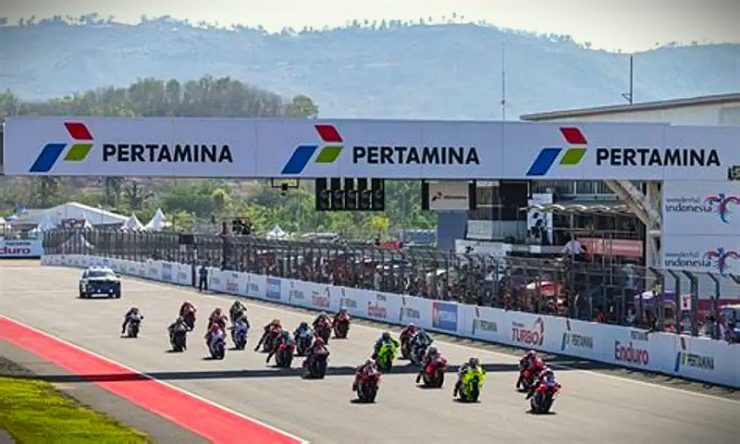

DURING the 2026 Pertamina Grand Prix of Indonesia at the Pertamina Mandalika International Circuit served not only as a magnet for tourists but also generated a direct economic impact for the surrounding community.
Local homestay operators in Kuta Village, Central Lombok, West Nusa Tenggara (NTB), experienced a boost in activity leading up to the main race event held on October 9–11, 2026.
Pertamina’s involvement extended beyond merely supporting the race itself; the company also actively supported the tourism sector, including homestay development. The presence of the Pertamina Grand Prix of Indonesia encouraged local residents to improve the quality of service provided to tourists. In collaboration with the University of Mataram, Pertamina provided training in hospitality, homestay management, and English language skills for homestay operators and staff.
According to Pertamina Corporate Secretary Arya Dwi Paramita said that this community capacity-building initiative was part of Pertamina’s effort to ensure that the sports tourism event in Mandalika delivered broader benefits to the local population. Kuta Village, Lombok, is the area located closest to the Pertamina Mandalika International Circuit.
“Therefore, the ‘Ring 1’ community [those living in the immediate vicinity] is a key focus for Pertamina, ensuring they can support the event’s continuity while also reaping economic benefits. We have implemented several initiatives. First, we assist in empowering the community to manage waste effectively. Second, we focus on enabling local residents to provide excellent service to tourists,” said Arya.
In addition to hospitality and English training, Pertamina helped the community develop waste management systems through “waste banks.” Inorganic waste is processed into value-added products such as handicrafts and bags, while organic waste is converted into fertilizer.
Pertamina also supported waste collection efforts by providing electric motorcycles. The vehicle is powered by a 6.6 kWp solar power plant (PLTS) installed at the Kuta Village Hall, alongside a 20-kWh battery storage unit that serves as a charging source.
This initiative is part of Pertamina’s “Desa Energi Berdikari” (Energy-Independent Village) program, which integrates education on energy potential and utilization with the development of clean-energy-based economic activities for the community.
Arya hopes these programs ensure that the benefits of the Pertamina Grand Prix of Indonesia extend beyond the race itself, noting that tourists visit Mandalika year-round, not just during the event.
“This annual event doesn’t happen every day, but tourists come here daily. This means there is an opportunity to turn that into something compelling. That is precisely what we are currently providing training and education on,” he affirmed.
Bani, a homestay owner, noted that the rise in room demand has been palpable over the past week. This trend runs counter to the usual tourism slowdown that typically begins in October; instead, the Pertamina Grand Prix of Indonesia has driven a significant increase in homestay occupancy rates in Kuta and the surrounding areas.
“Due to the immense demand surrounding the Pertamina Grand Prix of Indonesia, we have slightly raised our standard rates. Over the last week, homestay occupancy across Kuta and its vicinity has surged,” said Bani, owner of Mong Bungalows.
Under normal circumstances, room rates at his homestay range from IDR350,000 to IDR500,000 per night, depending on the season. However, high demand during the MotoGP period has led to rate adjustments.
Bani appreciates the program for providing the additional skills needed to manage homestays more professionally—particularly given that many homestay operators lack a formal background in tourism.
“Thanks to this program, we as owners have gained certified expertise and are able to improve the quality of our homestays—enhancing both our service standards and our management practices to be more professional,” he explained.
For other homestay operators, the economic impact was even more significant. Reddy Mardani—known as Dani—a representative of Mango Room Mandalika, noted that room rates, usually set at around IDR600,000 per night, rose to IDR2 million during the Pertamina Grand Prix of Indonesia. All rooms offered at that price sold out completely.
“Even though the event lasted only three days, we were able to generate perhaps three times the usual revenue. We sold rooms at IDR2 million per night, and they all sold out. Even though the event lasted only three days, we managed to generate perhaps three times the usual revenue. We sold rooms at Rp2 million per night, and they were completely booked out,” Dani added.
According to Dani, the rise in tourist numbers benefits more than just accommodation owners. Local workers, culinary businesses, Micro Small and Medium Enterprises (MSMEs), and service providers also share in the economic activity generated by this international sporting event.
He noted that since the Pertamina Grand Prix of Indonesia was first held in Mandalika in 2021, the number of tourists visiting the Kuta area—particularly international visitors—has increased annually. This trend has created more job opportunities for the local community.
“All our staff are locals. We are grateful for the development of so much accommodation in Kuta Mandalika, as it has provided us with employment opportunities. We hope this race continues to be held every year so that we can keep benefiting from the positive economic impact,” he concluded. [sources/photo special]