


 ER
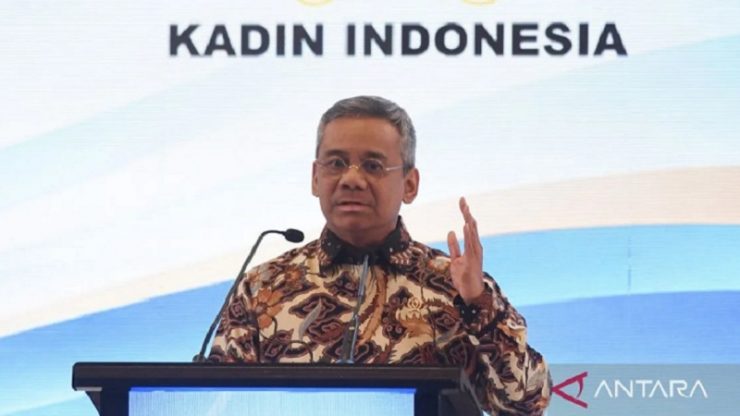

INDONESIAN Minister of Finance, Suahasil Nazara stated that the State Budget (APBN) is flexible in responding to evolving situations—including in terms of financing—which ensures its credibility.
“What is the financing used for? It is used to cover state expenditures. As I mentioned earlier, we always design state expenditures to be flexible so they can respond to changing circumstances,” Suahasil said in Jakarta on Friday (10/30), 2026.
According to him, current evolving situations include global conditions, such as volatile commodity prices and rising interest rates in various countries.
“Therefore, the state budget must be flexible in such a context. It serves as a tool to promote prosperity, foster growth, and protect the public, while maintaining the trust that it can function effectively,” he added.
For context, the central government—through the Ministry of Home Affairs and the Ministry of Finance—has established a joint technical team to map out and curate solutions for local governments experiencing fiscal difficulties.
This strategic move was agreed upon during a meeting between Minister of Home Affairs Tito Karnavian and Deputy Minister of Finance Suahasil Nazara.
Tito explained that the initial assessment focuses on regions where the fiscal space within the local budget (APBD) is severely constrained because personnel expenditures account for an excessive share—reaching 40% to 50% of the total local budget.
He noted that this heavy burden of personnel spending hinders the effective implementation of various priority development programs mandated by the central government at the local level.
To address these budgetary structural constraints, the Ministry of Home Affairs and the Ministry of Finance have deployed a joint technical team—involving various directorates-general—to comprehensively examine potential schemes for restoring the financial health of these local governments.
In addition to formulating mitigation strategies for regions with fiscal constraints, the two ministries are also aligning the integration of the national budget (APBN) and regional budgets (APBD) to provide tangible, phased interventions aimed at improving public welfare across all regions. These efforts serve as a unified approach to ensuring the state’s presence in the lives of its citizens.
Meanwhile, Deputy Minister of Finance Suahasil Nazara explained that the fiscal incentive allocation is designed to foster a healthy competitive environment among regional heads in achieving key development indicators—such as controlling inflation, alleviating poverty, improving environmental quality, increasing budget realization, and reducing unemployment.
He concluded that, as a form of recognition and a catalyst for regional performance, the central government has prepared a regional incentive fund (DID) totaling IDR1 trillion, which has been incorporated into the national budget (APBN). [antaranews]