


 ER

CREATIVITY in transforming natural materials into aesthetically valuable works continues to evolve. One such method is ‘eco printing’—a technique for dyeing fabric and imprinting patterns onto it by utilizing the natural shapes and pigments found in plants.
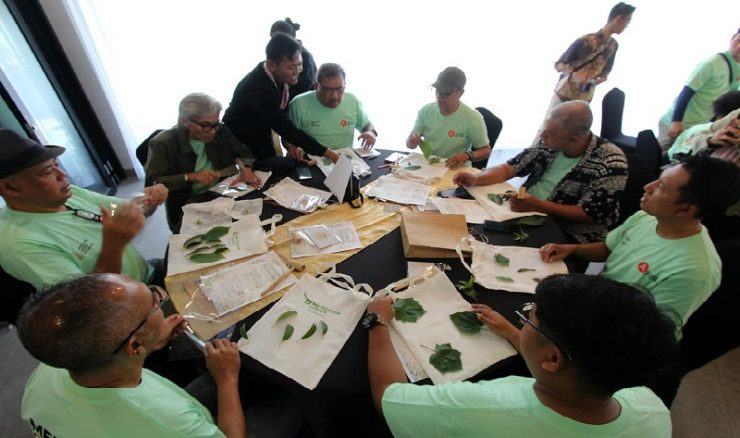
This was part of the experience gained by Sindikasi Media Network (SMN) during an ecoprint workshop held at Wyndham Garden Yogyakarta. Participants not only received an explanation of the eco print process but also engaged directly in creating pieces using the ‘eco print pounding’ technique.
The workshop offered an engaging experience, allowing participants to witness first-hand how simple leaves and flowers can produce unique patterns when applied to the surface of a fabric.
The activity also served to introduce a creative pursuit that blends art with the use of natural materials, highlighting its potential for development within the creative and tourism industries.
Exploring Eco print Pounding: A Technique for Imprinting Plant-Based Patterns
Eco printing is a technique used to create patterns on fabric by leveraging the natural characteristics of plants. Leaves and flowers are frequently used because their shapes, textures, and pigment content allow them to leave an imprint on the fabric.
During the workshop at Wyndham Garden Yogyakarta, participants were introduced to the ‘ecoprint pounding’ method. As the name suggests, this technique involves placing plant materials onto the fabric and striking them with a wooden mallet.
The impact of the mallet helps transfer the plant’s pigments and shape onto the fabric fibers. The resulting patterns reflect the specific forms of the leaves, their veins, and the inherent characteristics of the plants used.
Interestingly, no two ecoprints are ever exactly alike. Variations in leaf type, the freshness of the plant material, the nature of the fabric, and the amount of force applied during pounding all contribute to unique, distinct patterns. This inherent variability is a key part of the appeal of Eco printing; the fabric is not merely dyed, but adorned with patterns that feel organic and deeply personal.
Participants Learn to Create Fabric Patterns Using Leaves
During the practical session, participants prepared the tools and materials needed for ‘ecoprinting’. These included cotton or canvas fabric, leaves and flowers, a wooden mallet, a plastic covering, water, and alum.
Selecting the right plants is a crucial part of the process. Leaves with sufficient moisture content or pigment are ideal, as they help produce more distinct patterns on the fabric.
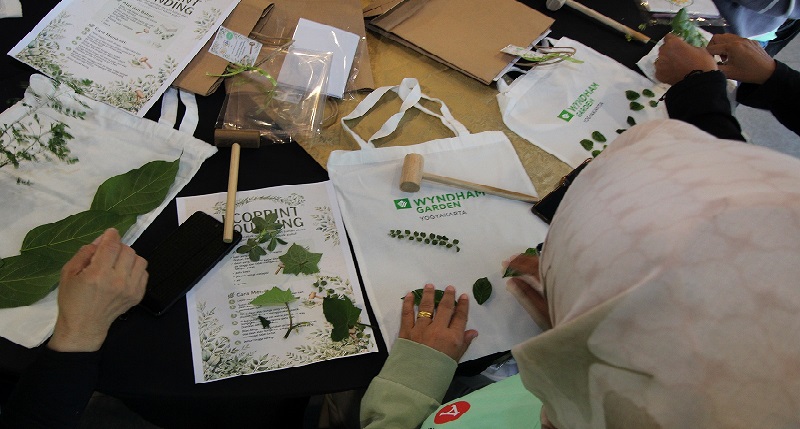
Once the fabric was ready, participants began selecting and arranging the leaves on its surface. The leaves were positioned carefully so that their shapes and vein structures would imprint clearly when hammered.
Next, the leaves were covered with plastic. This layer served as a protective barrier and helped ensure that the hammering process remained controlled.
Using a wooden mallet, participants gently and evenly tapped over the leaves. This step requires precision, as applying too much or too little pressure can affect the resulting pattern.
After the pounding process, the fabric was left to rest for about 15 minutes before moving to the next stage. It was then rinsed in an alum solution—as instructed in the workshop—to help set the colors and remove any remaining plant residue. The final step was drying the fabric. Once dry, the patterns created by the leaves and flowers became clearly visible.
Each Leaf Produces a Unique Pattern
One of the most compelling aspects of ‘eco printing’ is that the final results can never be perfectly uniform.
Different leaf shapes naturally produce different patterns. Even leaves from the same plant species may yield patterns that are not entirely identical.
Because of this, ‘Eco printing’ possesses a unique artistic value. The final outcome is deeply influenced by the natural materials used and the specific techniques applied during the process.
Beyond the shape of the leaves, the quality of the fabric is also a significant factor. The type of fiber, the condition of the material, the fabric preparation, the hammering technique, and the color-setting process all play a role in the final appearance.
In other words, creating an ecoprint involves more than just placing leaves on fabric and hammering them. It requires an understanding of the characteristics of the materials and the process itself, ensuring that the resulting patterns appear well-defined and possess good color fastness.
Ecoprint Can Be Developed into Various Creative Products
The ecoprint technique offers a wide range of applications. The finished work can be used to create diverse products, including decorative fabrics, bags, accessories, apparel, and souvenirs.
The uniqueness of the patterns serves as an added value, as each item possesses a distinct character—unlike products featuring mass-produced, printed designs.
The use of natural materials links the Eco print process to the development of creative products that are more environmentally conscious. Nevertheless, careful attention must still be paid to how materials are processed and how production is carried out, ensuring that these activities are conducted responsibly.
For those in the creative industry, Eco printing offers a way to develop craft products that carry a narrative. Motifs derived from plants can become an integral part of a product’s identity.
Ecoprint Workshops Foster Creative Experiences in the Tourism Sector
A workshop held at Wyndham Garden Yogyakarta demonstrates how creative activities can be packaged as an engaging experience for both the general public and tourists.
The tourism sector is no longer defined solely by visits to specific destinations. Activities that offer visitors hands-on, direct experiences are becoming increasingly important, as they allow travelers to take home new stories and skills from their journeys.
An ecoprint workshop is one such activity; participants do not merely observe the finished craft, but actively engage in the entire process—from the initial steps to the final creation of patterns on fabric.
For the hospitality sector, such activities have the potential to enrich the guest experience. Meanwhile, for creative communities, collaborating with hotels opens new avenues to introduce their techniques and craft products to a broader audience.
The involvement of media outlets, such as the Sindikasi Media Network, provides further insight into the importance of gaining a closer understanding of the diverse creative activities flourishing within the community.
Introducing Nature-Based Creative Industries
The participation of the Sindikasi Media Network in the ecoprint workshop at Wyndham Garden Yogyakarta offered a firsthand look at a creative process rooted in natural materials.
Ecoprinting illustrates how leaves and flowers—commonly encountered in everyday life—can be transformed into textile works with significant aesthetic value.
Furthermore, such initiatives highlight the potential for collaboration between the hospitality sector, the creative industry, local communities, and the media. Such collaboration serves as a way to broaden public literacy regarding local creative products, while simultaneously introducing experience-based activities within the tourism industry.
Ultimately, ‘ecoprinting’ is about more than just creating beautiful patterns on fabric. This technique brings human creativity together with the natural characteristics of plants. Each process yields its own unique surprise, as the resulting shapes and colors cannot always be predicted with exact precision.
The workshop at Wyndham Garden Yogyakarta serves as an example of how creative activities can be packaged into an experience that is both educational and interactive—one that is also meaningfully linked to the development of the creative and tourism industries. [traveltext.id]