


 ER
ER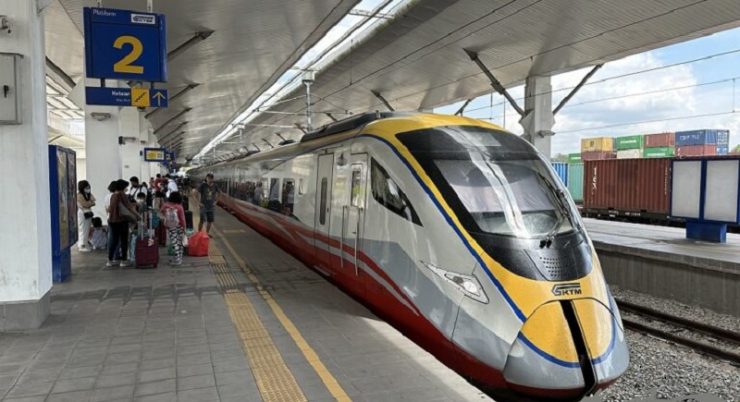

A TRAIN ride from Johor Bahru in southern Malaysia to the capital Kuala Lumpur will take just 3.5 hours from the end of this year.
This duration reduces travel time by approximately half compared to current travel times by diesel train or bus without congestion. This will be possible once Malaysia’s Electric Train Service (ETS) is operational, which is scheduled to begin on December 12, 2025.
Ibrahim ibn Iskandar, the King of Malaysia and Sultan of Johor, will inaugurate the service in Johor Bahru on December 11, the day before it opens to the public.
The inauguration of this electric train line will facilitate travel for tourists from Singapore to Kuala Lumpur. Tourists can cross the border in Johor Bahru before continuing their train journey to Kuala Lumpur. The Johor Bahru-Kuala Lumpur train route was previously operational, utilizing diesel trains that required approximately 7.5-8 hours to complete the journey.
ETS currently operates routes connecting Kuala Lumpur with cities in the north and west of Malaysia, including Ipoh, Penang, and Padang Besar on the Thai border.
According to a report by The Straits Times, Malaysian Transport Minister Anthony Loke stated that the initial phase of the rail network will connect to Kuala Lumpur. Long-distance routes, including services to Butterworth and Padang Besar, are scheduled to commence at a later date.
“For longer routes, trains are only able to make two trips a day: one up, one down. Shorter sectors such as Johor Bahru to Kuala Lumpur allow for more frequent trips,” he said.
Reported by Travel and Leisure, this electric train can reach speeds of up to 140 km/hour. It is scheduled to commence operations from KL Sentral to Kluang in August 2025. This train service was initially announced in 2011 by Malaysia’s national train operator, Keretapi Tanah Melayu Berhad (KTM). Construction on this project commenced in 2016 and encompasses locations such as Johor Bahru, Segamat, Kluang, and Kulai.
While the electric train is expected to benefit local Malaysians traveling between the peninsula’s main cities, the route could also benefit tourists from Singapore. [tempo.co/photo special]