


 ER
ER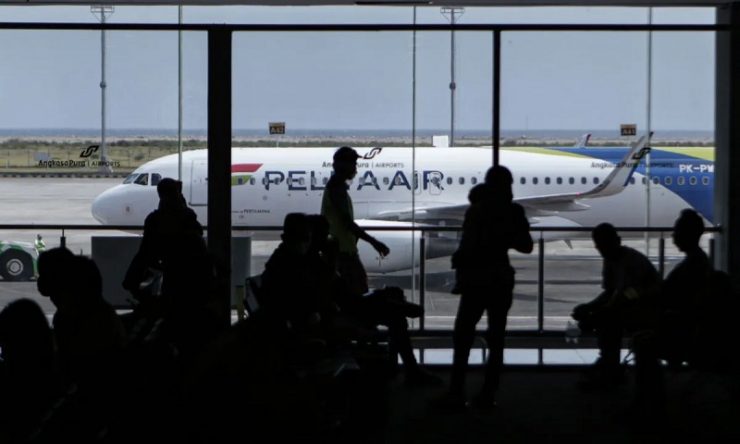

THE INDONESIAN government has allowed airlines to raise domestic airfares by 9-13% due to the oil crisis caused by the conflict in the Middle East, which has forced domestic aviation fuel prices to soar. Furthermore, the government is also reportedly planning to eliminate other cost components, such as administration fees for online bookings.
Regarding this, Revy Petragradia, a transportation observer from the Indonesian Transportation Society (MTI), stated that components such as ticket distribution costs and administration fees have only a small impact on the final price paid by passengers.
“Admin fees may have a slight impact, but they are not significant. Airlines will mostly regulate their base fares,” he said in a statement.
According to him, the main pressure on ticket prices actually comes from the increase in aviation fuel prices, which contributed up to 40%, from the original price of IDR13,656 to IDR23,551 per liter. Consequently, this situation has prompted the government to provide several incentives.
These include setting a 38% fuel surcharge for all aircraft types, implementing an 11% government-borne value-added tax (VAT DTP), and eliminating import duties on aircraft spare parts to 0%.
He stated that these steps were appropriate, as the airline ticket price structure has four main components that influence fares: fuel surcharge, base fare, value-added tax (VAT), and operational costs (airport tax).
With ticket prices increasing by 9-13%, Revy predicted a decline in passenger numbers in the near future. He stated that passenger projections could be depressed by 10-15%, especially amidst the unstable economic conditions.
“With a 9-13% increase, passenger projections will definitely be depressed by 10-15%, especially given the current uncertain economic conditions,” he explained.
He added that the business travel segment has the potential to be impacted, particularly due to government restrictions on business travel. Meanwhile, during long holiday periods, people are expected to continue traveling but tend to choose shorter trips to reduce expenses.
In the medium term, the main challenge for airlines is maintaining efficiency and optimizing operations amidst cost pressures and global uncertainty. Revy suggested that airlines begin developing more adaptive business strategies, including integrating aviation services with the tourism sector.
“Not only selling tickets, but also combining them with hotel and tourism services in the form of travel packages to make them more attractive and effective,” he concluded. [republika.co.id/photo antara]