

 ER
ER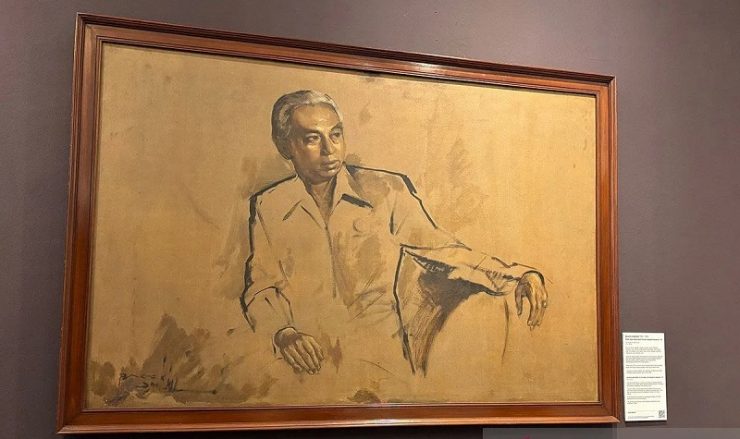

“MY attention to national painting, which began even before independence, has always been driven not only by appreciation of the artistic aspect, but also by the awareness of how vital the power of painting is as an expression of the ideals of the Indonesian nation’s national struggle from time to time,” said Adam Malik in the book “Paintings from the Collection of Adam Malik, Vice President of the Republic of Indonesia”, 1978.
Adam Malik (1917–1984) was known as an anti-colonial activist, journalist and one of the founders of the ANTARA News Agency, diplomat, and later Vice President of Indonesia for the period 1978-1983.
However, perhaps not many people know that he is also an art collector. He built the collection, which was later called the Adam Malik Collection, through friendships with artists, such as S Sudjojono since the 1940s, who was a key figure in modern Indonesian art and was given the title “Father of Modern Indonesian Painting”.
Adam Malik is friends with artists, including the Association of Indonesian Drawing Experts (Persagi), Young Indonesian Artists (SIM), People’s Painters, and even the People’s Cultural Institute (Lekra).
It was this network of friendships that later helped him build an art collection, especially paintings, since 1949. Adam Malik’s closeness to historical events and artists formed a unique painting collection.
Several of the paintings he collected record intimate stories of communities in transition between tradition and modernity, identity and social struggle in the early days of the New Order era.
Through the exhibition “The Adam Malik Collection” at the Museum of Fine Arts and Ceramics (MSRK) Jakarta on 15-23 August 2026, curators Farah Wardani and Amir Sidharta show the uniqueness of the diplomat’s painting collection to the public. This exhibition also marks 50 years since the founding of the Jakarta Fine Arts Hall, the predecessor of the Jakarta Fine Arts and Ceramics Museum (MSRK), which opened on August 20 1976.
In total there are 22 paintings on display, some of which were presented in the inaugural exhibition “A Century of Indonesian Fine Art” (1876-1976), which brought together 131 works from public and private collections, including 15 from Adam Malik.
A number of paintings from the Adam Malik Collection that are rarely exhibited are also presented, including a work by S Sudjojono, entitled “Maka Lahirlah Angkatan 66”, or “So the Generation of 66 Was Born”, which summarizes the complexity and significance of the collection, while also showing the connection between art and politics and the relationship between artists and patrons.
The work was painted amidst the political upheaval of 1966, recording the atmosphere in Jakarta when public spaces were filled with slogans, graffiti and demands for change.
It shows a young man in a red jacket holding a paint can, surrounded by protest writings referring to political events at that time. The identity of the young man is deliberately left ambiguous, thus inviting various interpretations about the changes and uncertainties of the times.
This is the only and last painting that Sudjojono made with a narrative that directly refers to the factual political situation of the country.
Jakarta in 1966 was filled with cars and motorbikes on the streets, people gathered, and slogans appeared in various corners of the city. In 1966, students took to the streets of Jakarta in a wave of demonstrations demanding political change.
The work seems to remain relevant in today’s tumultuous times. Economic policies, corruption and freedom of civil space in the era of the current government have again triggered several demonstrations in the capital, especially by students who focus on criticism.
Not only about politics, Adam Malik is also interested in intimate stories of societies in transition between tradition and modernity.
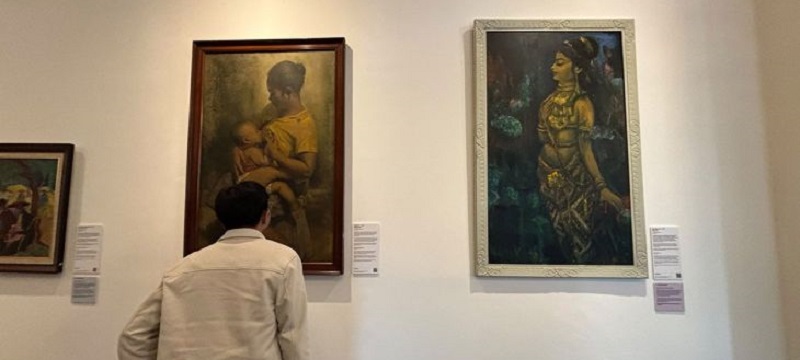
One of them is the 1965 “Pasar Hewan” or “Animal Market” painting collection by Roeliati Soewarjono (1930-2023), which was part of the 1976 “A Century of Indonesian Fine Arts” exhibition.
This painting captures the pulse of life in Indonesia’s agricultural society. The market is not only a place to buy and sell livestock, but also a meeting space for farmers and ranchers to build social relationships, chat and maintain community life.
In other collections, elements of tradition are the focus of Adam Malik, one of which is “Sesaji” or “Offerings” 1968 by Rusli (1916-2005). The offerings in the painting refer to the ritual of prohibiting offerings, namely throwing offerings into the sea, river or lake, which is practiced in various regions of Java.
Through “Sesaji” or Offerings, the tradition of offerings is raised as an expression of human relationship with nature and the spiritual world. Elements of tradition are also presented by Batara Lubis through the work “Brides of Mandailing I” 1970, which depicts a bride and groom from the Mandailing ethnic group, North Sumatra, which is the painter’s ethnic origin.
By combining traditional elements with modern visual language, he shows how Modern Indonesian art draws strength from the richness of local traditions.
Batara Lubis made several versions of the “Pengantin Mandailing” or “Bride of Mandailing” series, which are now stored in various institutions and private collections. This series has become his trademark, starting from two works collected by Adam Malik and then donated to the Jakarta Fine Arts Hall, which is now the Jakarta Fine Arts and Ceramics Museum.
There is also “Dewi” 1962 by Agus Djaya. This painting depicts women wearing clothing and jewelry inspired by the reliefs of Hindu-Buddhist temples in Java, bringing back historical and spiritual traces in the language of modern painting. “Dewi” was also presented in the “A Century of Indonesian Fine Arts” exhibition.
Through his collection of paintings, Adam Malik participates in recording stories of the past, which might awaken the memories of those who lived at that time and are still alive today.
Let’s explore the figure of Adam Malik through a collection of brush strokes on canvas by Indonesian artists through the exhibition “The Adam Malik Collection” at the Museum of Fine Arts and Ceramics (MSRK) Jakarta. [antaranews]