

 ER
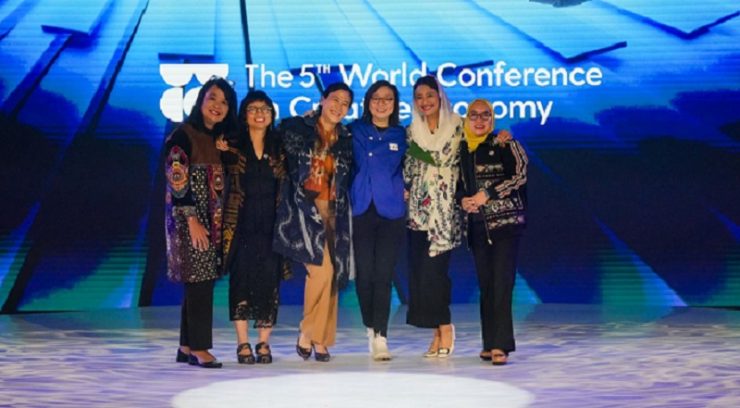

SIX FEMALE deputy ministers from the Red and White Cabinet have underscored the importance of strategic, cross-sectoral collaboration to enhance accessibility and strengthen the competitiveness of Indonesia’s creative economy (Ekraf) ecosystem.
In the lead-up to the 5th World Conference on Creative Economy (WCCE) 2026, these deputy ministers highlighted the vital interconnections between infrastructure development, higher education, women’s empowerment, international trade, and the strengthening of cooperatives in supporting the growth of the national creative economy.
The panel session, held at the Hotel Indonesia Kempinski in Jakarta, featured Deputy Minister of Public Works Diana Kusumastuti, Deputy Minister of Higher Education, Science, and Technology, Stella Christie, Deputy Minister of Women’s Empowerment and Child Protection Veronica Tan, Deputy Minister of Trade Dyah Roro Esti Widya Putri, Deputy Minister of Cooperatives Farida Farichah; and Deputy Minister of Creative Economy Irene Umar. Together, they outlined integrated measures to foster sustainable, cross-sectoral linkages for local creative economy stakeholders.
Irene emphasized that creativity serves as the primary unifying thread across all development sectors. Inter-ministerial synergy acts as a crucial foundation for transforming the creative potential of the public into high-value, sustainable economic assets.
“Infrastructure connects us, knowledge prepares us, inclusion provides space for every voice, cooperatives strengthen us, and trade brings our stories to the world. It is creativity that binds it all together,” said Irene.
Irene also elaborated on the formulation of the “Jakarta Vision” for WCCE 2026, which serves as a strategic cornerstone for solidifying the position of the creative economy within the global development agenda.
“The Jakarta Vision is not just for Jakarta or Indonesia; it is for the global community. Through the WCCE, we aim to transform the voices of artisans, weavers, and digital creators into a collective commitment toward sustainable development,” Irene added.
From the perspective of equality and empowerment, Veronica Tan underscores the need to provide broader leadership opportunities for women within the creative industry. She argues that the cultural potential and skills of women in the regions must be accelerated through improved access to technology, financial support, and the opening of market supply chains.
“We must ensure that women have access to skills, technology, financing, and markets—not merely to participate, but to lead, create, and reap the benefits. Inclusion is not just about inviting women into the room; it is about empowering them to shape the future,” says Veronica.
Regarding the pillar of knowledge development, Stella Christie highlights the vital role of higher education institutions in sustaining creative work while expanding its commercial reach. She cites research and mentorship initiatives focused on traditional weaving at Nusa Cendana University in East Nusa Tenggara as a concrete example of how traditional knowledge can be preserved and transformed from cultural heritage into an inclusive economic opportunity.
Centered on the theme “Inclusively Creative: Collective Continuity,” the WCCE 2026—taking place from October 21–23, 2026—brings together diverse stakeholders to discuss the future of the creative economy. The perspectives shared by the six deputy ministers demonstrate that strengthening this sector requires interconnected policies, human resource development, community empowerment, and market expansion, all of which are essential for Indonesia’s creative potential to flourish sustainably. [traveltext.id]